Booker Flowers & Gifts, 7 Booker Avenue, Allerton, Liverpool, Merseyside, L18 4QY
Choosing your wedding flowers isn't just about which blooms you love. The shape and style of your wedding bouquet can completely change the feel of your wedding flowers — from a neat and timeless round posy to a wild, meadow-inspired design overflowing with movement.
But here's the thing: there are no rules anymore.
Your wedding bouquet doesn't have to match a particular dress shape, wedding theme or Pinterest trend. It should feel like you. Your dress, venue, season, colour palette and the flowers you love all play a part, and that's where your florist comes in. We can take the ideas you've collected, the elements you already know you want and all those "I love this but I'm not quite sure why" moments, and turn them into a bridal bouquet that feels completely yours.
So, whether you're looking for classic wedding bouquet ideas, something wild and romantic or a bouquet that's a little more sculptural, here's our guide to some of the most popular bridal bouquet styles.
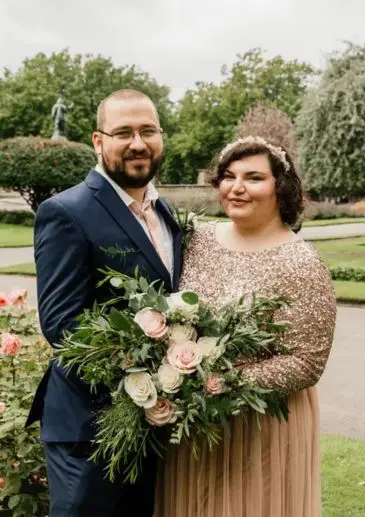
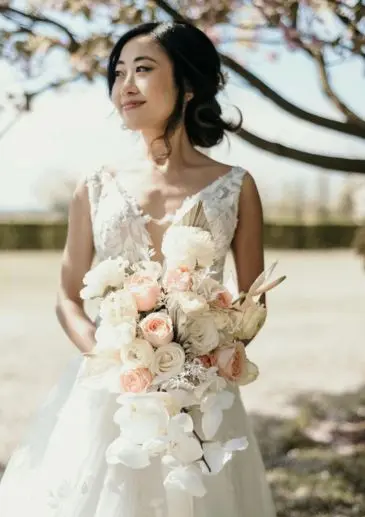
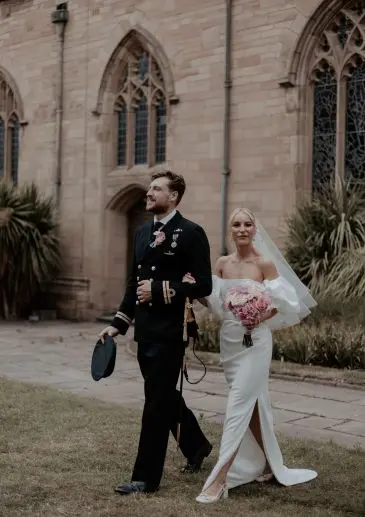
While classic bouquet shapes aren't going anywhere, but we're also seeing couples become much more adventurous with their wedding flowers.
For 2027 and into 2028, there's a real appetite for bouquets that feel personal rather than prescribed. Think movement, texture, interesting silhouettes and flowers that look as though they've been chosen because the couple genuinely loves them — rather than because they're considered "bridal".
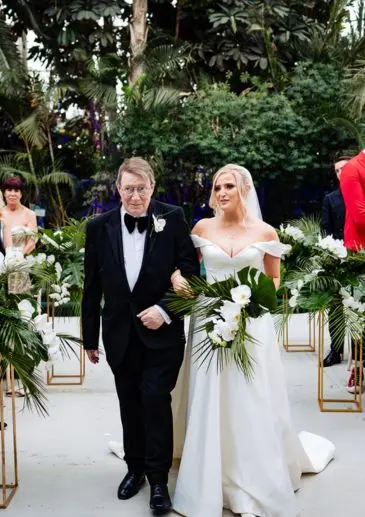
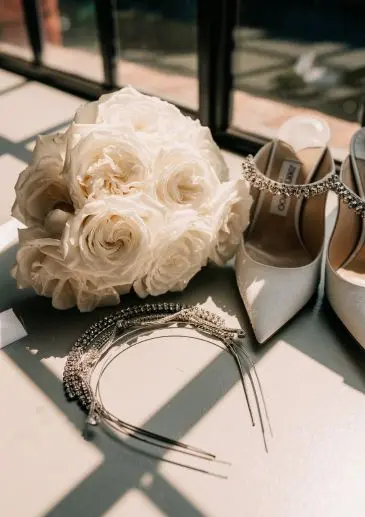
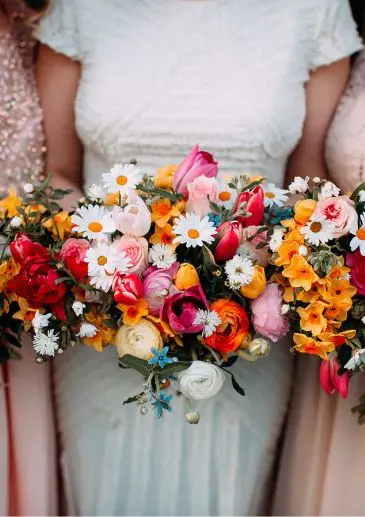
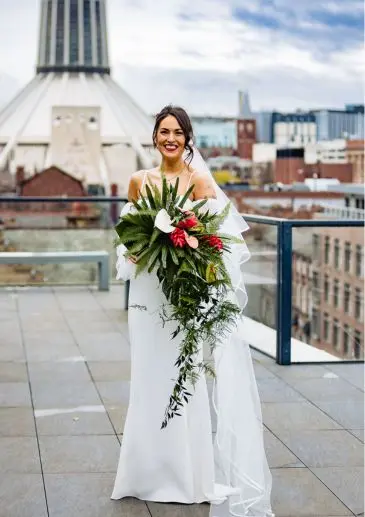
From timeless and structured to loose, wild and wonderfully full of movement, there are plenty of ways to shape your bridal bouquet. Below, we've rounded up eight of the most popular wedding bouquet styles we create for brides, from classic round posies and hand-tied bouquets to cascading, over-the-arm and more contemporary shapes.
Think of these as inspiration rather than rules. Your bouquet can be adapted to suit your dress, flowers, season and wedding style — or you can mix elements from several different styles to create something completely your own.
The classic round wedding bouquet is one of the most recognisable wedding bouquet styles. Flowers are arranged into a neat, rounded shape, creating a polished and timeless finish. A traditional version might use a handful of flower and foliage varieties in a limited colour palette.
A round bridal bouquet doesn't have to feel old-fashioned either. Use seasonal flowers, interesting textures or a slightly looser arrangement and it can feel wonderfully contemporary while retaining that elegant rounded shape. A bridal bouquet with white roses, for example, can be incredibly classic, while adding delicate seasonal flowers and textural foliage can give it a softer, more garden-inspired feel.
What dress suits a round bridal bouquet: A neat posy works particularly beautifully with an A-line or fuller skirt, where its compact shape balances the proportions of the dress. But don't let that put you off if you're wearing something completely different. Your bouquet should ultimately be chosen around the whole look — and your personal style.
Florist's tip: A smaller posy can look beautifully refined, while a larger, fuller round bouquet can make much more of a statement.
Want to see this style in action? Take a look at this Knowsley Hall bride
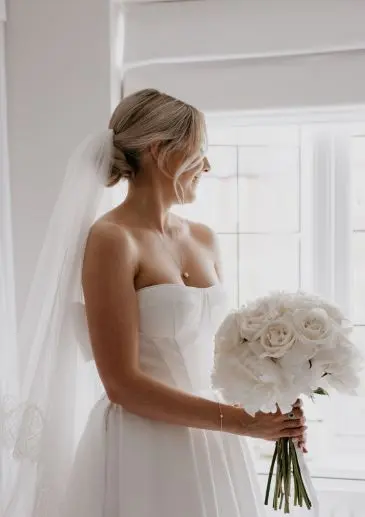
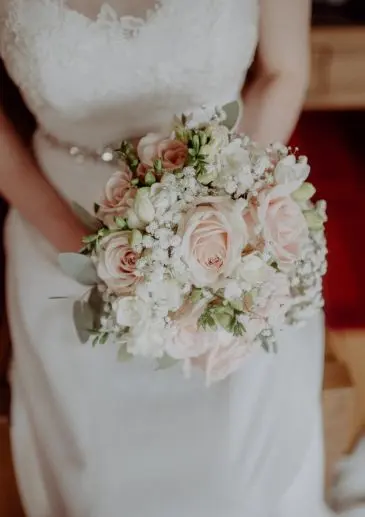
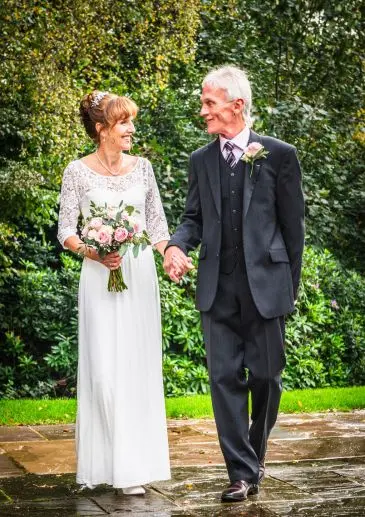
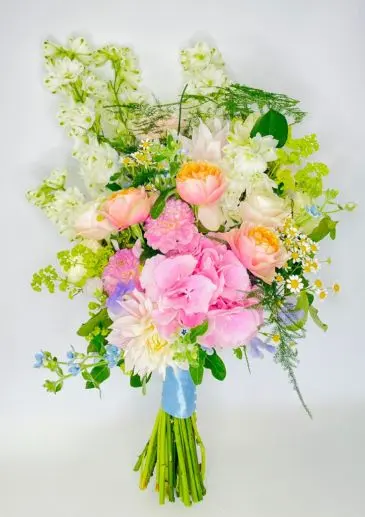
A hand-tied wedding bouquet is exactly what it sounds like: the stems are gathered and tied together by hand rather than being hidden within a formal bouquet holder. This is less about one particular shape and more about the way the bouquet is constructed. A hand-tied bouquet can be neat and rounded, loose and garden-inspired or beautifully wild. That's what makes it such a versatile wedding bouquet for bride.
What does a hand-tied bouquet look like: The stems are usually visible at the base of the bouquet, sometimes finished with ribbon, fabric or a sentimental detail. It works particularly well when you want your flowers to feel natural and abundant rather than overly formal.
Florist's tip: Don't underestimate the importance of the stems. The way they're gathered, tied and finished can be just as much a part of the overall design as the flowers themselves.
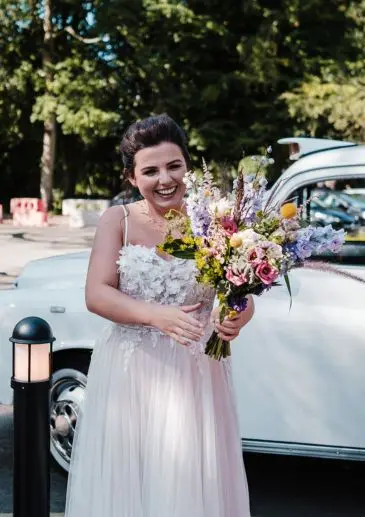
Imagine you've wandered into a beautiful cutting garden, picked a handful of your favourite flowers and gathered them together. That's the feeling we're aiming for with a loose, just-picked bouquet. The shape is still broadly round, but the flowers aren't forced into perfect symmetry. Different flower heads sit at slightly different heights, creating a sense of movement. This is one of our favourite wedding bouquet ideas for couples who want something romantic and natural without going fully wild.
Flowers that suit a just-picked bridal bouquet styling: Roses, sweet peas, cosmos, delphiniums, scabious, astrantia and seasonal foliage can all work beautifully here. The exact combination will depend on the season.
What dress suits a loose round bouquet: Almost anything. That's part of its charm. It works beautifully with flowing dresses, lace, A-line silhouettes and relaxed gowns, but can also provide a lovely contrast against a much more structured dress.
Want to see this style in action? Take a look at this late Spring wedding at Delamere Manor
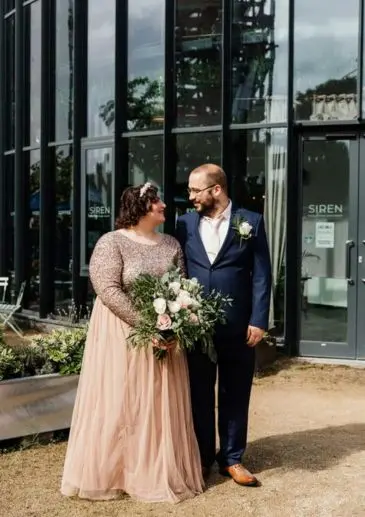
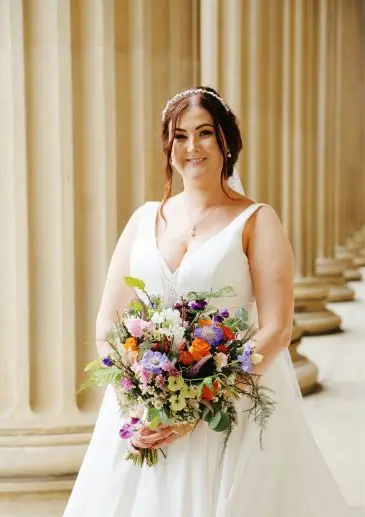
If you love the idea of wild flowers wedding bouquet inspiration, this is where things get interesting. Wild and meadow bouquets take the just-picked look and turn up the volume. Rather than creating a controlled rounded shape, the flowers are allowed to move, bend and spill naturally. Think grasses, seedheads, delicate flowers, unusual foliage and blooms at different heights. The result is abundant, textural and full of movement.
What flowers work in a wild wedding bouquet: This is where seasonal flowers really come into their own. Depending on the time of year, you might find sweet peas, cosmos, delphiniums, scabious, achillea, grasses, seedheads, dahlias, roses and lots of interesting foliage making an appearance. It's also a wonderful style for incorporating British-grown flowers.
What dress suits a wild or meadow bouquet: It naturally complements relaxed, boho and outdoor weddings, particularly when paired with flowing or less structured dresses. But again, there are no rules. A wild bouquet against a very sleek, modern dress can create a brilliant contrast.
Florist's tip: "Wild" doesn't mean random. There's still a huge amount of thought behind where every stem goes. The trick is making it look as though there wasn't.
Want to see this style in action? Take a look at our Wild, Wonderful & Whimsical Bridal Bouquets reel.
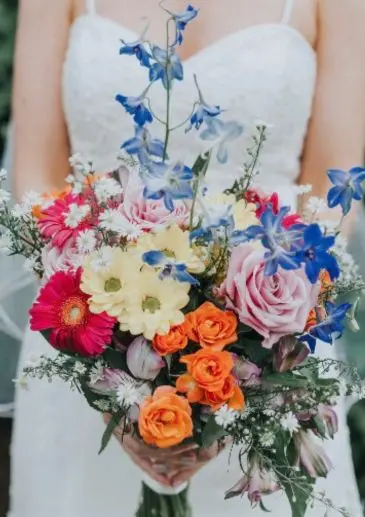
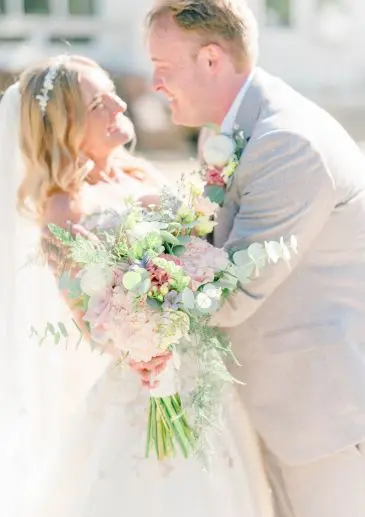
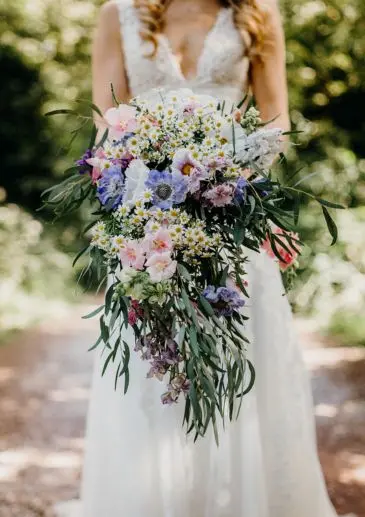
A shower bouquet is defined by its downward-flowing shape, with flowers and foliage extending below the main body of the bouquet. This creates a graceful, elongated silhouette and can range from highly formal to beautifully loose and natural.
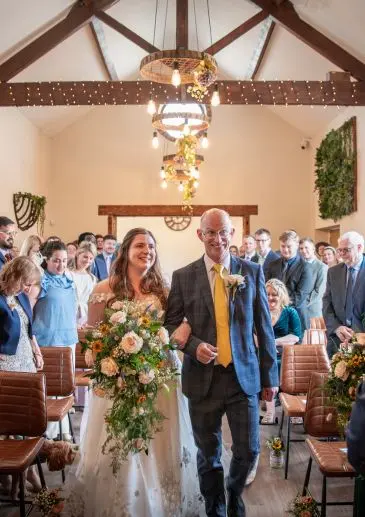
There are a few different alterantives that are simular in styling to the Shower bouquet which are:
A cascading bouquet is the more dramatic version of the shower style. Flowers appear to tumble downwards, creating a generous trail of blooms. A formal cascade might use a restrained colour palette and minimal foliage, while a looser version can include plenty of greenery, texture and movement. It's a wonderful choice if you want your bouquet to feel abundant and romantic.
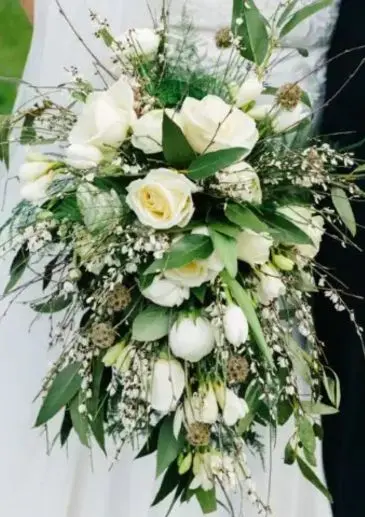
A teardrop bouquet has a more defined and usually smaller shape, gradually narrowing towards the bottom to create an elegant teardrop silhouette. It's more controlled than a cascading bouquet and can look beautifully sophisticated, particularly when the flowers are arranged quite closely together.
What dress suits a shower bouquet: The elongated shape can work beautifully with fuller skirts and dresses where you want the bouquet to add length and movement. A dramatic cascade can also look incredible against a fitted or fishtail gown, creating a lovely contrast between the curves of the dress and the movement of the flowers.
Florist's tip: If you're drawn to a cascading bouquet but don't want something overly traditional, ask your florist about creating a more asymmetrical, loose-flowing version.
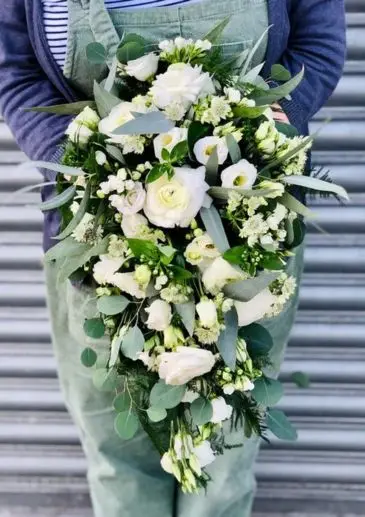
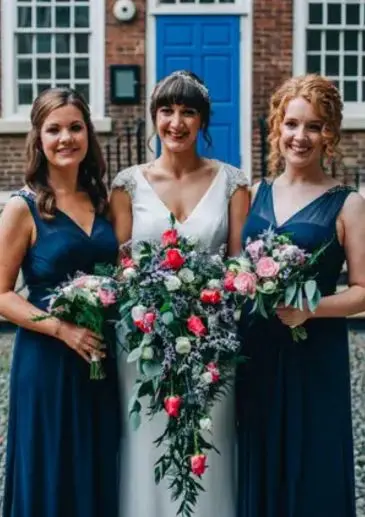
An over-the-arm bouquet is designed to be carried across the forearm, with the flowers resting around the elbow rather than being held directly in front of the body. It's a wonderfully elegant option and can feel both vintage and distinctly modern depending on the flowers you choose.
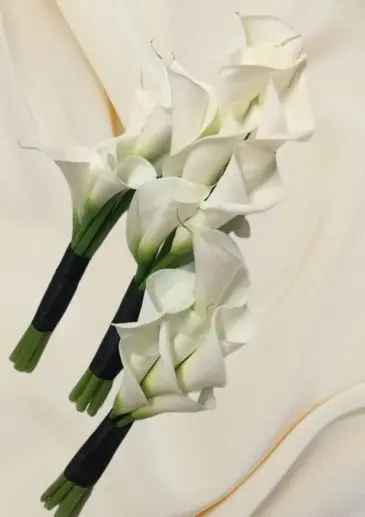
A formal version might feature just one type of flower or a small number of blooms arranged in a structured, architectural way. Calla lilies are particularly suited to this style. Their long stems and sculptural trumpet-shaped flowers make a wedding bouquet calla lily design feel incredibly elegant and sophisticated. Long-stemmed roses can create a similar effect.
Want something less formal? Use more flower varieties and allow the stems and flowers to move more naturally. This can create a relaxed, romantic look while retaining that distinctive over-the-arm shape.
What dress suits an over-the-arm bouquet: This style can look particularly striking with fitted, column or vintage-inspired dresses. It's also a brilliant choice if you want something a little different from the traditional front-facing bouquet.
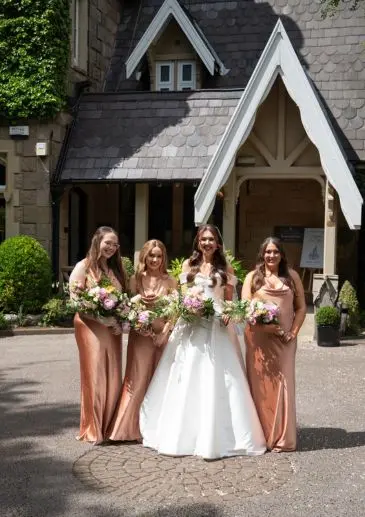
The semi-crescent is a more contemporary bouquet shape, with flowers sweeping gently outwards from the centre to create a curved silhouette. It can be symmetrical, with the same movement on either side, or deliberately asymmetrical for something more relaxed and modern. This is a lovely option if you're looking for a bridal bouquet style that feels a little less traditional.
What flowers work in a semi-crescent bouquet: Flowers with strong stems and distinctive shapes can work particularly well, alongside blooms that naturally bend or trail. Orchids, anthuriums, roses, calla lilies and interesting foliage can all be used to create a more sculptural design.
Florist's tip: The semi-crescent is all about the silhouette. It's worth looking at your bouquet alongside your dress rather than considering the flowers in isolation.
Want to see this style in action? Take a look at Marco and Anna's wedding
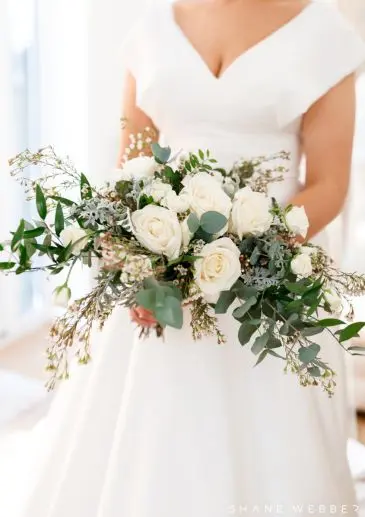
Sometimes one beautiful flower is quite enough. A modern formal bouquet is often built around one flower variety, creating a deliberately restrained and architectural design. Think a generous bunch of calla lilies, long-stemmed roses or another flower with a naturally strong silhouette. The result is elegant, contemporary and incredibly chic. A bouquet of white roses can be completely traditional — or it can be made to feel wonderfully modern through its shape, scale and styling.
When should you choose a modern formal bouquet: This style works particularly well if you love clean lines, minimalism and strong shapes. It can also create a gorgeous contrast against an intricate or heavily embellished wedding dress. And if you've always dreamed of a particular flower, this could be the perfect opportunity to let it have the starring role.
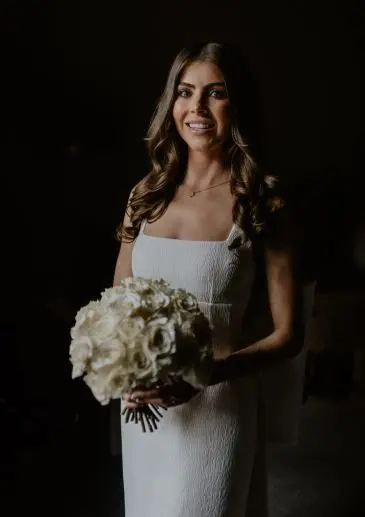
There are a few things worth considering when choosing your bridal bouquet, but don't feel as though you need to tick every box.
Start with your dress.
Your dress is a useful starting point because you want your flowers and gown to feel like they belong together. A heavily structured dress might look incredible with a more architectural bouquet, while a flowing dress could be beautifully complemented by something loose and meadow-inspired. But contrast can be just as effective.
Think about your wedding venue.
A bouquet that's perfect for a grand city wedding might feel completely different at a relaxed countryside celebration. Consider the architecture, surroundings, tablescapes and overall atmosphere you're creating.
Consider the season.
Your wedding date will influence which flowers are naturally available and at their best. Rather than trying to recreate a bouquet from a photograph using flowers that aren't in season, we'd much rather take the feeling you love and recreate it using beautiful flowers that are available at the time of your wedding.
Think about colour.
Your bouquet doesn't have to exactly match your bridesmaids or venue. Sometimes introducing a contrasting colour can make everything feel more interesting.
And then think about you.
This might be the most important bit. Do you love neat and structured things or slightly wild and unruly ones? Do you adore roses? Are you drawn to colour? Do you want your bouquet to smell amazing? Is there a flower that reminds you of someone important? Those details are what turn a nice bouquet into your bouquet.
There's no single price for a wedding bouquet because every bouquet is different. The cost can be influenced by the flowers you choose, their seasonality and availability, the size of the bouquet, the number of stems required and how intricate the design is. A small, simple posy using readily available seasonal flowers will naturally cost less than a large, highly detailed cascading bouquet packed with premium blooms.
If you're at the early stages of wedding planning, our wedding flower price list is a useful place to start. It gives you an idea of our pricing before you get into the exciting business of choosing your flowers.
See our wedding flower price list
And don't worry if you don't know what you want yet. That's what your florist is there for.
There isn't one perfect list of flowers for bridal bouquet designs. The best flowers are the ones that suit your style, wedding season and the look you're trying to create. Roses remain a favourite because they're just so timeless and available in an enormous range of colours and varieties and work beautifully in everything from classic posies to wild garden-style bouquets.
Other popular choices include:
Sweet peas for fragrance and a delicate, romantic feel
Peonies, Dahlia or Lisianthus for their generous, ruffled blooms
Carnations or Ranunculous for colour and texture
Delphiniums or Snapdragons for height
Narcsissus, Freesia, Lavender or Lily of the valley for scent
Calla lilies for a modern, sculptural look
Hydrangeas for volume
Hypericum berries, blue viburnum or scabious seed heads for texture
Orchids, Anthuirums, Gingers or Strelizia's for a tropical feel
Your florist can also suggest alternatives if there's a particular flower you love but it's not naturally available at the time of your wedding.
Perhaps the biggest change we've seen in wedding flowers is that couples are becoming much more confident about doing things their way. Your bouquet doesn't have to be white. It doesn't have to be round. It doesn't have to match your bridesmaids. It doesn't have to contain roses. And it certainly doesn't have to look like anyone else's.
Use these wedding bouquet ideas as inspiration rather than instruction. Save the photographs you love, bring them to your florist and talk about what it is that draws you to them. Sometimes it's the shape. Sometimes it's the colour. Sometimes it's one particular flower.
Our job as Liverpool wedding florists is to work out what's behind that inspiration and turn it into a wedding bouquet for bride that works with you, your dress, your wedding and the season — while still feeling unmistakably yours.
Round, hand-tied bouquets remain hugely popular because they're versatile and can be adapted to almost any wedding style. Loose, natural and meadow-inspired designs are also increasingly popular with couples looking for something less formal.
Start with the things you already know you love — your dress, colours, venue, favourite flowers and overall wedding style. From there, your florist can help you choose a shape and size that brings everything together.
Not necessarily. Your bouquet should complement your dress rather than match it exactly. Sometimes a contrasting shape, texture or colour can create a much more interesting overall look.
Roses, peonies, sweet peas, lilies and hydrangeas have all been popular bridal flowers, but there really are no limits. Seasonal flowers, meadow flowers and unusual blooms can all make beautiful bridal bouquets.
Absolutely. A wild flowers wedding bouquet can be full of seasonal flowers, grasses, seedheads and natural foliage. The result can be relaxed and romantic while still being carefully designed.
Yes. A bridal bouquet of white roses can be incredibly elegant, whether you choose a neat formal posy, a loose garden-style bouquet or something more contemporary and architectural.
Definitely. Calla lilies are particularly effective in modern, formal and over-the-arm bouquets because of their naturally sculptural shape. They can also be combined with other flowers for a softer, more romantic design.
We recommend getting in touch with your florist as early as possible, particularly for weddings during the busiest months. This gives you plenty of time to discuss your ideas, flowers, colour palette and budget and allows your florist to plan for your wedding date.
That's exactly what we're here for. You don't need to arrive knowing the name of your bouquet style or have every flower chosen. Bring us your inspiration, tell us what you love (and what you absolutely don't!) and we'll help turn those ideas into something that works beautifully for you.
Booker Flowers & Gifts, 7 Booker Avenue, Allerton, Liverpool, Merseyside, L18 4QY
Registered in England and Wales
Company reg. no. 09396097
VAT no. GB995310989